Prediction Market Platforms
Prediction market platforms handle your money and settle contracts in different ways, affecting what you own and how you get paid.
Several prediction market apps can offer contracts on the same championship or interest-rate decision. Comparing them involves understanding whether they connect you to the same market and whose rules determine what your position pays.
An exchange lists contracts and runs the marketplace where they trade. A broker gives its customers access to that exchange, as Robinhood does through its partner exchanges. If two apps offer the same exchange's contract, they give access to the same underlying market. A contract listed on a separate exchange can have its own prices and outcome rules, even when its title looks similar.
Kalshi and Polymarket also use different systems to record positions and transfer funds. Kalshi's clearinghouse, Kalshi Klear, manages the payment obligations from accepted trades. Polymarket's international platform records positions as outcome tokens, which holders redeem according to the recorded result. Polymarket also operates a separate US exchange, so comparing it with Kalshi requires distinguishing between its two products.
Kalshi vs Polymarket: what's the difference?
Kalshi offers dollar-funded contracts on a regulated US exchange, with a clearinghouse managing payments. On Polymarket international, traders hold tokens representing event outcomes, backed by crypto collateral and transferred through blockchain programs.
Polymarket also has a separate US product. The comparison below concerns its international platform.
| What you are comparing | Kalshi | Polymarket international |
|---|---|---|
| Regulatory structure | The Commodity Futures Trading Commission (CFTC) oversees KalshiEX. | The platform states that it operates independently of Polymarket US and is not CFTC-regulated. |
| Money used | Contracts are priced and paid in US dollars. | Trading uses a dollar-linked collateral token backed by USDC, a stablecoin designed to track the dollar. |
| What you hold | An event-contract position recorded through the exchange and its clearinghouse. | An outcome token held in an account wallet. |
| Completing a trade | The exchange matches orders; Kalshi Klear accepts and clears the trade. | The order book matches users' offers; blockchain programs transfer the collateral and tokens. |
| Deciding the result | Kalshi's markets team finalizes the outcome using the contract's specified sources. | UMA accepts proposed results subject to challenge and, if necessary, a token-holder vote. Certain crypto markets use Chainlink price data instead. |
| Receiving payment | Settlement credits the holder's cash balance through the clearing system. | Outcome tokens are redeemed for collateral according to the recorded result. |
Is Polymarket regulated like Kalshi?
Kalshi and Polymarket US operate exchanges under the Commodity Futures Trading Commission, or CFTC. Polymarket's international platform states that it is not regulated by the CFTC. Polymarket US and Polymarket international are separate products under one brand, with different arrangements for holding and settling positions.
KalshiEX holds the CFTC exchange registration called a designated contract market. Kalshi Klear is its clearinghouse, a derivatives clearing organization responsible for accepted trades and their collateral. Kalshi's disclosure identifies both businesses as subject to CFTC oversight.
The CFTC oversees the exchange and clearinghouse at both Kalshi and Polymarket US. Polymarket's international platform states that it is not CFTC-regulated, and its users hold positions as tokens in wallets.
For these exchanges, oversight includes duties to set and enforce trading rules and to monitor trading activity. Brokers handling customer orders and funds have their own customer-protection obligations, as the CFTC's explanation of prediction markets sets out.
Polymarket vs Polymarket US
Polymarket US describes its exchange and clearing operations as a designated contract market and derivatives clearing organization under CFTC oversight. Trading uses US dollars and a central limit order book, which matches participants' orders. The international product uses crypto collateral and blockchain records.
After a US contract's outcome is finalized, Polymarket Clearing processes settlement. Standard contracts pay one dollar to the correct side and zero to the other, subject to any alternative terms in the market's rules. The history of Polymarket's US exchange explains how the separate regulated business developed.
What types of prediction market platforms are there?
Prediction market platforms can operate cash-funded exchanges, blockchain venues, or play-money markets. Brokers give customers access to exchanges, while forecasting platforms collect probability estimates without trades. A separate use of “types” concerns binary and multiple-choice event contracts, which describe the possible outcomes a contract covers.
The arrangements overlap. A blockchain venue can run an order book, and several apps can give access to the same exchange. A sports or crypto-price contract can appear on several types of platform.
| Arrangement and example | How participants take part | Where funds or positions sit | Who applies the outcome rules |
|---|---|---|---|
| Exchange with clearing, such as Kalshi | The exchange matches participants' orders. | The clearinghouse manages collateral and payment obligations. | The exchange finalizes the result. |
| Brokerage access, such as Robinhood | A broker sends customer orders to a listing exchange. | Funds pass through the broker and clearing arrangements. | The listing exchange applies its contract rules. |
| Blockchain venue, such as Polymarket international | An operator or protocol arranges trades. | Wallets hold positions backed through blockchain programs. | An oracle reports the external result to those programs. |
| Betting exchange, such as Betfair | Customers take opposing back and lay positions. | Customers fund the amounts they could lose. | The operator applies its market rules. |
| Play-money market, such as Manifold Markets | Participants trade using virtual balances. | The platform records virtual funds and positions. | Usually the question's creator, subject to moderation. |
| Forecasting platform, such as Metaculus | Participants submit probabilities that the platform combines. | A forecast needs no trading collateral. | Administrators or a designated resolution council resolve questions. |
How do prediction markets work on Robinhood and Coinbase?
Robinhood prediction markets work through Robinhood Derivatives, a broker that sends orders to partnered exchanges, including Kalshi. Coinbase offers access to Kalshi's markets through Coinbase Financial Markets. In both apps, the listing exchange sets the contract terms and applies them when deciding the outcome.
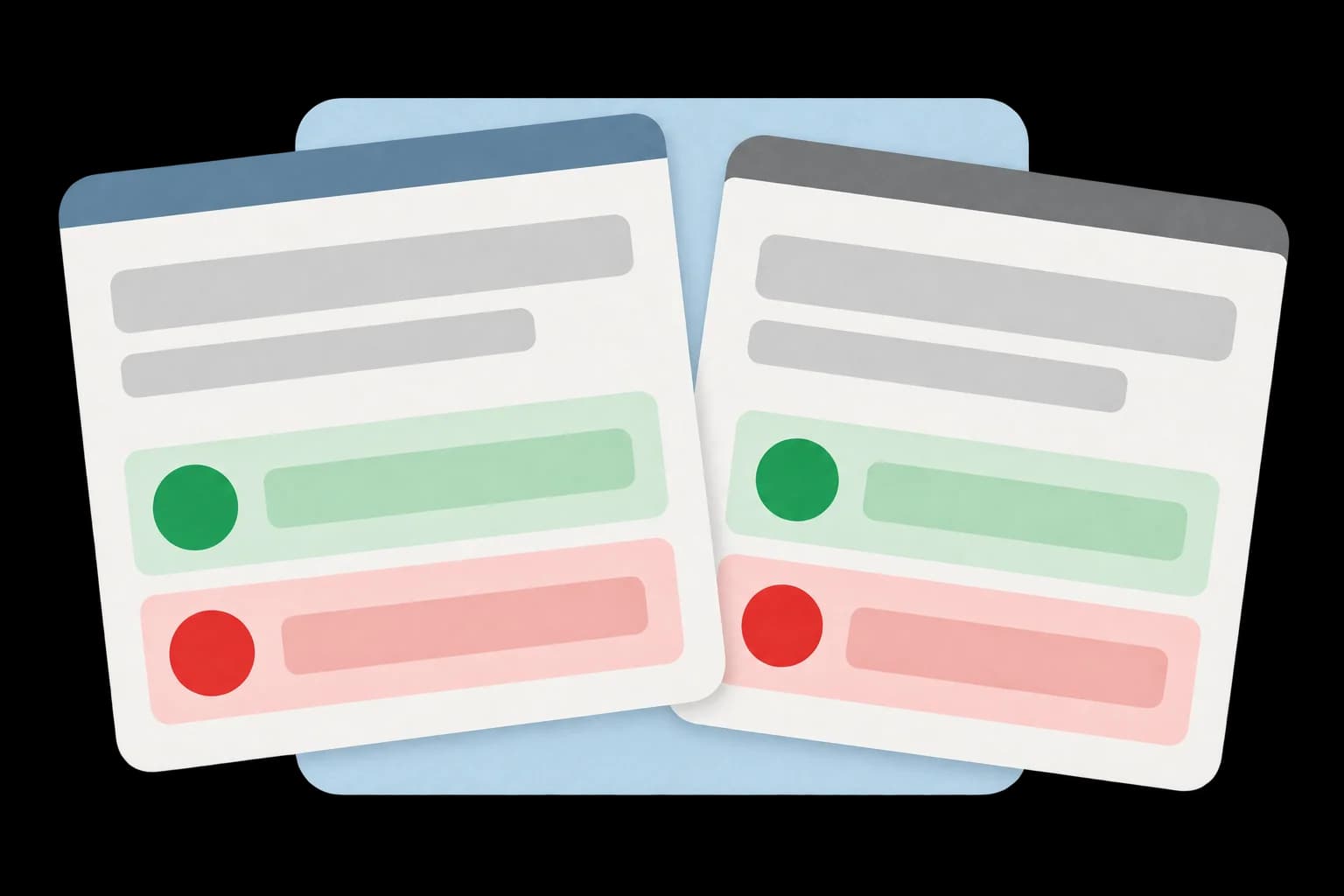
The same exchange contract appears in two apps, so their matching Yes and No choices give access to one underlying market.
Kalshi vs Robinhood
For a Kalshi-listed contract offered through Robinhood, Kalshi runs the exchange and Robinhood Derivatives handles your orders and account. Robinhood's disclosure identifies its brokerage business as a registered futures commission merchant, the registration category for a broker handling these trades. The app can offer contracts from several exchanges, each with its own rules and clearing arrangements.
Suppose two apps display the same Kalshi contract about a team's championship chances. Their prices come from one underlying market. Counting them as two independent forecasts would count the same trading activity twice. A separately listed contract on another exchange has its own orders and can reach a different price.
For a hypothetical contract on a team's championship win, two broker apps share Kalshi's order book and its 62¢ Yes price. A contract on another exchange has its own order book and a 58¢ Yes price.
The broker sets its own charges and decides which order instructions it supports. Robinhood's order guidance distinguishes orders that can wait for a match from those whose unfilled quantity is cancelled immediately.
Robinhood says event-contract buying power is separate from stock-brokerage and crypto balances. The same disclosure says Robinhood Derivatives is neither FDIC insured nor SIPC protected. FDIC insurance protects eligible bank deposits if a bank fails, while SIPC helps recover missing customer cash and securities when a member brokerage fails.
Coinbase prediction markets
Coinbase prediction markets offer Kalshi-listed contracts through Coinbase Financial Markets, which acts as the broker. Kalshi determines each result from the source named in the contract's rules. Coinbase honors that result and cannot manually override it.
DraftKings Predictions vs sportsbook
DraftKings Predictions offers exchange-traded contracts, including listings on its own DKeX exchange. On an order-book exchange, participants' orders supply the prices and the other side of a trade. In the sportsbook model, the operator quotes its own prices and takes the customer's opposing position.
Does Kalshi trade against you?
Your order on Kalshi matches another member's order. That member can be Kalshi Trading, an affiliated company approved to trade on the exchange. Kalshi says the exchange itself does not take positions against members.
Kalshi says the affiliate operates separately from the exchange and that information barriers prevent the exchange from sharing non-public information with it. The member supplying the other order might be expressing a forecast, reducing an existing risk, or quoting prices as a market maker.
Polymarket international also describes its trading as participant-to-participant, and Polymarket US says it does not take the other side of customers' trades.
Trading and clearing counterparties
Kalshi Klear is the clearinghouse that takes responsibility for accepted Kalshi trades. Its clearing rules make it the buyer to each selling member and the seller to each buying member once it accepts their trade. Members then owe contract payments to the clearinghouse and receive payments through it.
If a registered broker clears your trade, it handles your account and settles with Kalshi Klear. Any money due to you passes through that broker.
For an accepted trade, Kalshi Klear acts as seller to the buying member and buyer to the selling member. If you use a clearing broker, it manages your account and payments while settling with Kalshi Klear.
Is my money safe on Kalshi and Polymarket?
Kalshi says customer trading funds are held separately at Kalshi Klear. On Polymarket international, wallets hold your collateral and positions, and the matching operator can execute only trades you authorize.
What Kalshi Klear does with customer funds
Kalshi Klear's rulebook requires participant collateral to be kept legally and operationally separate from its own property. Collateral is the money committed to cover contract payments. For a fully collateralized contract, the clearinghouse checks that the account has the necessary funds before accepting a trade and rejects it if the funds are missing.
A hypothetical $60 account can cover one order for 100 Yes contracts at 34¢, committing $34. The $26 left cannot cover a second identical order, so the clearinghouse rejects it.
For a standard contract resolving No, the committed collateral goes to the No holder. A Yes holder receives zero, losing the amount paid for the position.
Polymarket wallet control
A Polymarket wallet holds spendable collateral and tokens representing open positions. The owner approves transactions through a signer, the key or connected wallet with permission to act for the account. Polymarket can update the software for some wallets unless the owner opts out.
A redeemed position returns the venue's crypto collateral, whose dollar value depends on its backing. The resolution process decides how much collateral each outcome token can be redeemed for.
How do decentralized prediction markets work?
Decentralized prediction markets use blockchain programs to record positions, transfer assets, or distribute funds after an event resolves. These programs are called smart contracts. A company may still run the website and match orders, as it does on Polymarket international.
Polymarket matches orders outside the blockchain and completes matched trades on the blockchain. During trade settlement, collateral and tokens representing Yes or No positions move between trading accounts to complete the purchase. Later, the event's recorded result determines how much collateral the holder can redeem for the token.
For a binary question, one unit of collateral backs a complete set of one Yes token and one No token. Holding both sides allows the owner to merge the set back into collateral. A holder of just one side can sell it to another trader, or redeem it according to the recorded result after resolution. The collateral backing the set remains committed while those outcome claims are open.
On Polymarket international, one unit of collateral can be split into a Yes token and a No token, then recovered by merging the pair. After a Yes result, the Yes token redeems for that unit and the No token for nothing.
Polymarket funds trades with a collateral token backed by USDC, a dollar-linked stablecoin. That collateral can back a position on a Bitcoin price target, a film release date, or a central bank decision.
An oracle brings information about the event into the blockchain system. Polymarket's oracle arrangements include UMA, where a proposed result can be challenged and unresolved disputes can reach a token-holder vote. Certain crypto-price markets instead use a Chainlink data feed. The market resolution criteria specify the evidence the mechanism must apply.
How does a prediction market order book differ from an AMM?
An order book matches offers submitted by traders, while an automated market maker, or AMM, offers trades using a formula that responds to its balances or positions. Kalshi and Polymarket use order books. Manifold combines limit orders with an AMM.
| Trading mechanism | Where the price comes from | What happens when you buy | What supports the available quantity |
|---|---|---|---|
| Order book | Participants submit offers at particular prices and quantities. | You take available offers; a larger purchase may reach more expensive ones. | The orders other participants leave in the book. |
| AMM | A formula calculates quotes from the mechanism's balances or positions. | The purchase changes those balances or positions, changing the next quote. | Funds committed by liquidity providers or a sponsor. |
Suppose the lowest offer on an order book has only ten contracts available. A purchase of fifty needs offers beyond those ten, potentially at higher prices. With an AMM, the formula can keep quoting as the purchase changes its holdings. A large purchase may move the quote substantially even if no other participant submits a new order.
In this hypothetical order book, only 10 of the 50 contracts bought cost 40¢. Taking another 20 at 42¢ and 20 at 45¢ brings the total to $21.40 before fees, or 42.8¢ per contract on average.
The AMM's funding determines how much trading it can absorb near the displayed price. One design described by Robin Hanson has a sponsor cover the mechanism's possible losses, allowing it to quote before the market attracts enough traders for an active book. Other designs use pools of assets committed by liquidity providers. A lightly funded pool can produce a price while offering little quantity near it.
Two hypothetical automated market makers use Robin Hanson's pricing rule and start at 40¢, with different amounts of funding. Buying 50 Yes contracts raises the lightly funded quote to 83¢ and the heavily funded quote to 45¢, with average purchase prices of 63.4¢ and 42.4¢ respectively.
Manifold fills trades against limit orders first, then against its AMM, so both mechanisms can contribute to the same purchase.
For either mechanism, comparing the cost of the intended quantity gives a fuller picture than comparing the displayed price. A 40-cent quote might apply to only a small part of the order. The rest could cost more, making the average purchase price higher. Order-book depth and slippage explain how available quantity changes the amount paid.
Why can't I withdraw money tied up in Kalshi or Polymarket positions?
When you buy a fully paid event contract on Kalshi or Polymarket, you exchange spendable funds for a position. Your portfolio can show that position's value even though those funds are committed. Closing the position or receiving its settlement payment turns the claim back into available funds.
Suppose you spend $34 on 100 Yes contracts and their displayed value later rises to $50. If a buyer takes all 100 at that price, you receive $50 and realize a $16 gain before fees. Until the sale completes, you still own the contracts, whose value can change with prices and the event's result.
Spending $34 of a hypothetical $100 balance on 100 Yes contracts leaves $66 available, even after the position's displayed value rises to $50. Selling the contracts at 50¢ each makes $116 available and realizes a $16 gain before fees.
The route back to funds depends on the venue. A position may be sold, paired with its opposite, or held until resolution. ForecastEx closes positions through purchase of the opposite contract, for example. The calculations for selling or closing event contracts distinguish what you receive from the collateral already backing the position.
Does Kalshi pay interest on open positions?
Kalshi pays interest on eligible cash balances and open positions, passing through interest received from its banking partners. It calculates the interest using portfolio value.
ForecastEx's incentive coupons come from earnings on invested collateral. It distributes those earnings to member firms according to their share of the collateral. The amount a customer receives depends on how their member firm shares the earnings.
Polymarket Holding Rewards are funded by the Polymarket Treasury. The program pays rewards based on eligible position values in selected markets.
Time also changes the economics of the contract itself. A hypothetical No position costing 98 cents and paying one dollar if correct offers two cents of profit before fees. If settlement is tomorrow, the capital is committed briefly. If settlement is two years away, the same possible gain requires a much longer commitment unless the holder finds an earlier exit.
If No is correct, a hypothetical position bought for 98¢ pays $1 and earns 2¢ before fees. Holding it until settlement ties up the money for one day or two years, with the longer wait yielding about 1% a year.
Two contracts bought at the same price and settling for the same amount can leave different returns if one venue pays interest or rewards during the holding period. The cost of tying up capital also affects how closely a price follows a probability estimate.
How do betting exchanges relate to prediction markets?
A betting exchange matches customers taking opposite sides of an outcome. Its back and lay positions can be translated into Yes and No contracts when the outcome definitions match. In the traditional sportsbook model, the bookmaker sets its own offered prices and takes the customer's opposing position.
To back an outcome is to take the side that benefits if it happens. To lay an outcome is to take the side that benefits if it does not. Betfair calls the layer's potential loss liability and calculates it from the decimal odds and the other customer's stake.
Consider a hypothetical team priced at decimal odds of 4.0. Decimal odds express the total return for each unit committed, including that original unit. A £1 back position returns £4 if the team wins, producing £3 of profit before charges. If the team does not win, the £1 is lost.
The customer laying the same position risks £3 to gain the other customer's £1. Together, the two customers commit £4, which goes to the correct side. Expressed per pound of eventual payment, the positions compare as follows:
| Position | Amount committed | Profit if correct | Equivalent event-contract price |
|---|---|---|---|
| Back the team at 4.0 | £1 | £3 | Yes at 25p per £1 of settlement value |
| Lay the team at 4.0 | £3 of liability | £1 | No at 75p per £1 of settlement value |
The layer's £3 liability buys the equivalent of four No contracts at 75p each. If the team fails to win, those contracts pay £4 in total, returning the £3 committed plus £1 of profit. All these amounts exclude commissions and other charges.
At hypothetical decimal odds of 4.0, the backer's £1 and the layer's £3 together cover £4 of settlement value. That is equivalent to four £1 contracts, with the backer paying 25p for each Yes position and the layer paying 75p for each No position, before commissions.
The draw matters when comparing positions. In a match that allows a draw, laying Team A to win benefits if Team A loses or draws. Backing Team B to win benefits only if Team B wins. Buying No on Team A has the same exposure to a draw as laying Team A.
A draw benefits both a lay position and a No contract on Team A, while a back position on Team B loses. All three positions gain if Team B wins and lose if Team A wins.
The regulatory framework can differ even when the positions have equivalent payment terms. In Great Britain, the Gambling Commission's remote betting intermediary licence covers an operator bringing customers together without taking liability for their positions.
How is Metaculus different from Polymarket and Manifold?
Metaculus combines probability forecasts submitted directly by participants. Polymarket and Manifold produce prices through trading, using real assets on Polymarket and virtual balances on Manifold. A forecaster can change an estimate by submitting a new number, while a trader needs a transaction at an available price to change a position.
Metaculus vs Polymarket
For binary questions, Metaculus's Community Prediction uses a median of participants' latest probabilities, weighted toward more recent submissions. Participants can update their forecasts without committing trading funds.
On Polymarket, a displayed percentage comes from the market for outcome tokens. To act on a forecast, you buy or sell at available prices, and the size of that trade affects how far the market moves. A person with a strong view and a small balance might change the price very little.
Suppose a company announces that a product has entered testing. A forecaster could raise an estimate of release by December from 40% to 65% by submitting the new number. A trader with the same revised view has to decide what price is worth paying for contracts and how much money to commit.
Metaculus vs Manifold
Manifold is a play-money prediction market. Its virtual currency, mana, cannot be converted into cash, but spending it on one position leaves less available for another. The displayed percentage emerges from trades against limit orders and an automated market maker. Metaculus records estimates without requiring participants to allocate a trading balance.
The sites also assign responsibility for outcomes differently. Manifold generally lets the question's creator resolve it, with moderators able to intervene. Metaculus uses administrators or designated resolution councils.
Trading profit and forecast scores measure different things. Profit depends on the entry price and position size as well as the outcome. A probability scoring rule such as the Brier score evaluates the stated probability against what happened. Two people can make the same probability estimate and earn different trading profits because they bought at different prices.
When a product is released by December in this hypothetical example, both traders' 65% forecasts have a squared error of 0.1225. Buying Yes at 50¢ earns Trader A 50¢ per contract before fees, while Trader B's 60¢ purchase earns 40¢.
Real money vs play money prediction markets: which are more accurate?
Real-money markets have been more accurate in some studies, while play-money markets have matched them in others. The questions included in a comparison can change its result, even when the same two platforms are being compared.
| Venues compared | Questions studied | Finding |
|---|---|---|
| TradeSports, using real money, and NewsFutures, using play money | 208 NFL games in the 2003 season | The 2004 study found neither venue systematically more accurate. |
| TradeSports and NewsFutures | A mixed sample of events and separate tests including North American team sports and the daily direction of the Dow | The 2006 study favored TradeSports overall and on non-sports questions. Results for North American team sports were not statistically significant. |
| Real-money and play-money contracts on iPredict | Both the overall trading activity and contracts on matching events | The iPredict study found higher accuracy for real money on matching events, but no statistically significant difference in the broader comparison. |
The iPredict finding shows why matching the questions matters. A platform carrying mostly near-term sports questions and one carrying difficult, long-term technology questions are attempting different forecasting tasks. Their overall accuracy figures combine those differences with any effect of the money used.
Both hypothetical platforms have Brier scores of 0.15 on near-term sports questions and 0.25 on long-term technology questions. The mix gives Platform A a score of 0.17 overall with 80 sports and 20 technology questions, while Platform B scores 0.23 with 20 sports and 80 technology questions.
For a trader comparing sources, the relevant record consists of the same resolved questions, probabilities recorded at comparable times before resolution, and a common scoring method. A price recorded the day before an event has more information available than one recorded six months earlier. The evidence on prediction market accuracy needs to be read with those horizons in view.
Polymarket vs Kalshi: why do prices differ?
Kalshi and Polymarket have different traders and available orders, and apparently similar contracts can ask different questions. Even when the outcomes match, buying offsetting positions commits money on both venues until the trader can sell or receive settlement. A preprint comparing ten venues from 2018 to 2025 links persistent gaps to this cost of holding positions that cannot be combined across venues.
The deadline and source named in each contract determine whether the two positions settle on the same result. Searching Polymarket and Kalshi markets for a weather station's name can locate contracts that use its readings.

Two weather contracts use different observation sites, one in a park and one at an airport. Each settles using its own station's reading, so the contracts can have different results.
Consider two hypothetical contracts about interest rates. One pays Yes if the Federal Reserve cuts its target rate at the next scheduled meeting. The other pays Yes if it cuts at any time before year-end. A later cut can make the second contract correct while the first is incorrect. Their prices can differ even if both markets assess the future accurately.
In this hypothetical sequence, the Federal Reserve leaves rates unchanged at its next meeting and cuts them at a later meeting before year-end. The contract on a cut at the next meeting resolves No, while the contract on a cut before year-end resolves Yes.
Closely matching titles can also hide different measurements. The same study documented New York City temperature contracts using Central Park readings on Kalshi and LaGuardia Airport readings on Polymarket. The stations can record different temperatures, so the contracts were claims on different results.
The hypothetical contracts both ask whether New York City's high exceeds 90°F on the same day, but they use different stations. Central Park's 89°F makes the Kalshi contract resolve No, while LaGuardia Airport's 91°F makes the Polymarket contract resolve Yes.
The price comparison also needs the same type of number recorded at the same time. A display might show the last trade, the midpoint between buying and selling offers, or an offer available for a particular quantity. A last trade can remain unchanged while offers move, and a midpoint can sit between prices at which anyone will trade. Polymarket documents a midpoint display with a last-trade fallback when spreads widen.
How do fees and settlement time affect cross-venue arbitrage?
Fees and higher fill prices reduce the margin on an arbitrage trade, while waiting for settlement keeps money committed on both venues. For matching standard binary contracts, buying Yes on Kalshi and No on Polymarket produces a combined one-dollar payment when both markets resolve alike.
For a hypothetical 40-cent Yes contract and 57-cent No contract, the gap to the one-dollar payment is three cents. The combined cost of two chosen contracts is shown before bid/ask spreads and venue fees, so actual fill prices and charges determine how much of that margin remains.
In a hypothetical pair of matching contracts, buying Yes for 40¢ and No for 57¢ leaves 3¢ from the $1 settlement. With a 1¢ fee per contract, the margin falls to 1¢ at those prices and becomes a 1¢ loss if No fills at 59¢.
The two positions cannot be combined across venues to release their collateral. Selling before settlement returns whatever buyers will pay for the positions. Holding them to settlement leaves that money unavailable for another trade throughout the wait, even when the combined payment is known.
A pair with different settlement rules can leave both purchased sides with no payment.
In this hypothetical pair, Yes on Kalshi costs 40¢ and No on Polymarket costs 57¢. If different rules let Kalshi resolve No and Polymarket Yes, both purchased positions pay zero and the full 97¢ purchase cost is lost.
Event Contracts
How contract terms determine what a position pays and how it can be closed.
Order Books
How available prices and quantities affect the cost of a trade.
Market Resolution
How sources and settlement rules turn an event into a contract result.
Market Accuracy
How to compare market forecasts with the outcomes that followed.
Event Contracts
Event contracts turn a future outcome into a tradable position, with prices and payment rules that determine your potential gain or loss.
History of Prediction Markets
How prediction markets developed from election trading into online exchanges, and why earlier markets closed or never opened.